
Mammography Machine Price – How Much Does It Cost?
Sep 24, 2024
This article has been updated 24-02-2025 In this article we will use our almost 20 years of experience to answer one of the most common...

Aug 28, 2023 | Articles, Mammography
This article has been updated 29-01-2025
Mammography machines are a specific type of X-ray equipment that is used exclusively for breast imaging.
With relatively low doses of X-rays they produce images – called mammograms.
Mammography continue to be the leading modality in early detection of breast cancer.
They are capable of detecting changes in breast tissue up to two years before it is palpable. Therefore, some countries offer screenings every 2 or 3 years for women from a certain age.
If you are looking for a system, this article will be a good preperation for your next purchase, as it covers all the main points above.
First up is how to pick a brand and a line of mammography machines.
The major players on the mammography systems market are: Fuji, Hologic, GE, and Siemens.
Each of these manufacturers produce excellent models that provide high quality imaging.
This also makes them obvious choices for used systems, as these systems remain in a great condition for many years. Of course, regular machine maintenance makes sure that they will last even longer.
There are a few factors to consider when choosing between the high-end brands.
But really, it comes down to whether you have access to service for each brand in your region, and your personal preference.
Learn more about the different brands and their product lines below.
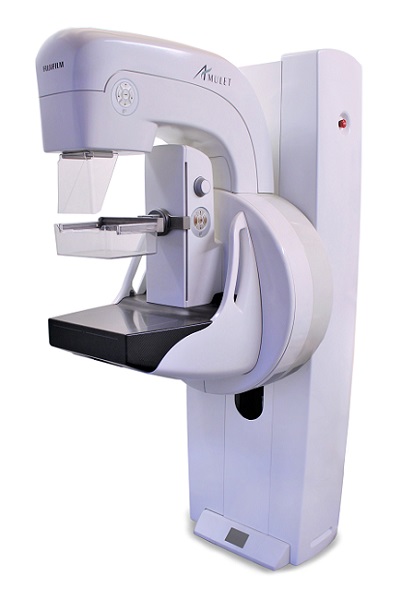
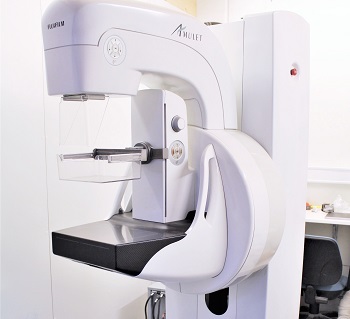
Fuji is a popular choice among our customers, mainly due to their Amulet series. This series contains several different digital models: The Amulet One, a 2D system, and the Amulet S and Fuji Amulet F.
The difference between these is that the Amulet S is the newer version, replacing the Amulet One. The Amulet F is slightly different, as biopsy can be added as an extra option.
One of the newest systems from Fuji is the Fuji Amulet Innovality, which is a tomosynthesis (3D) system. This machine has become fairly common on the used market.
Fuji does not have any analog systems available.
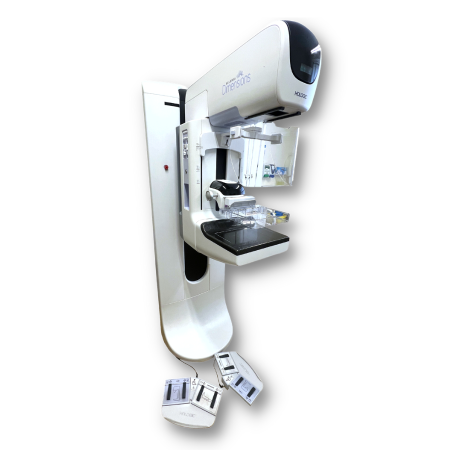
Hologic is another strong player in the market. Their main models are the Selenia 2D systems, the Dimensions 2D, and Dimensions 3D, a tomosynthesis system.
The Dimensions 3D is the newer model and is preferred over the 2D systems. This Hologic mammography machine is very popular on the used market.
Hologic also has biopsy as an option that can be added on both lines.
You can still find their analog models in the used market, for instance the Lorad M-IV, but they have decreased in popularity. Digital systems are much more common on today’s market.
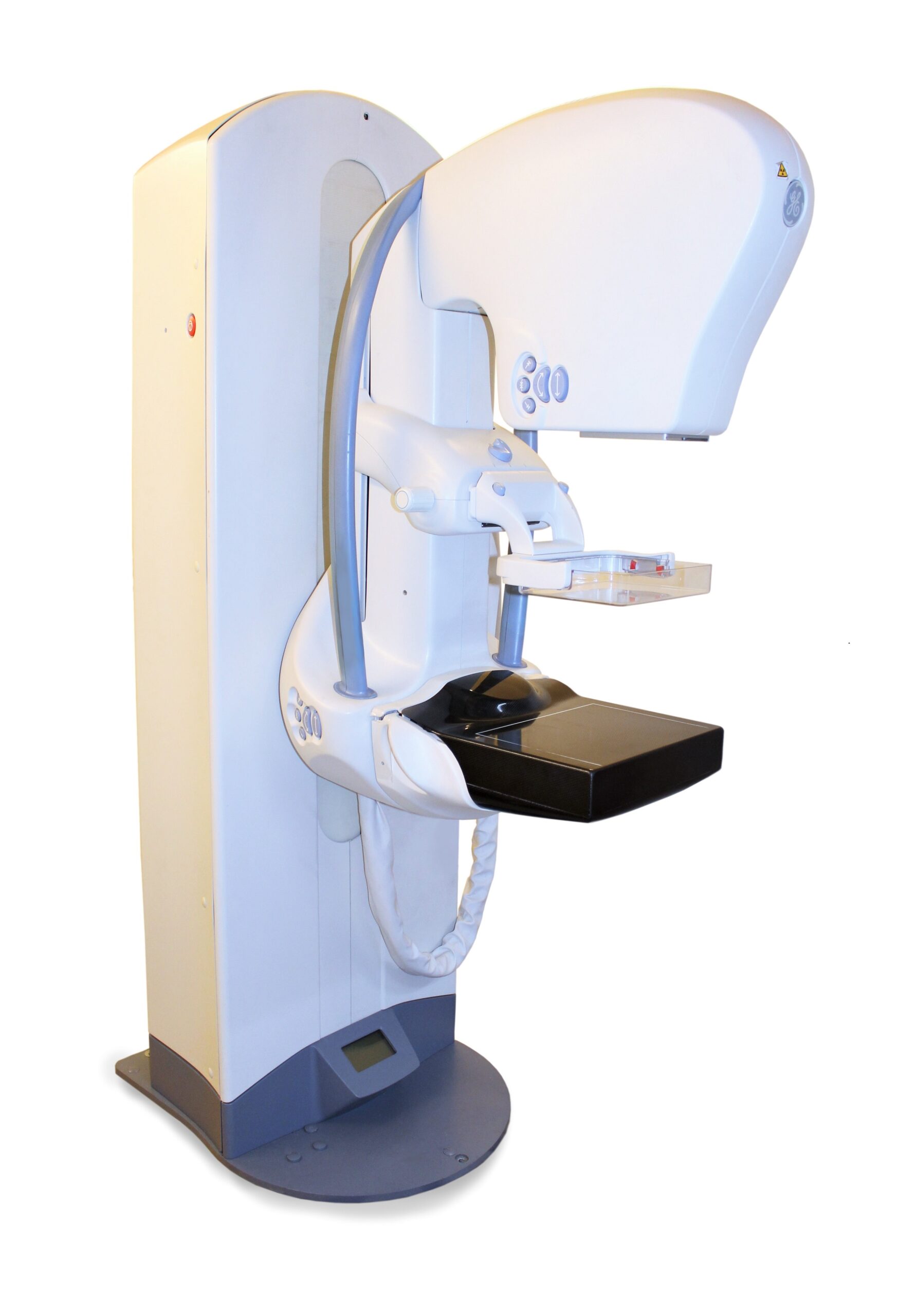
GE, like Hologic, has two main lines that are relevant at the moment. The GE Senographe Essential and the Senographe Pristina.
Each has a 2D model and a 3D model.
The Pristina is quite new, therefore, our assessment is that it will be a while before these are available in the used market.
All of GE mammography machines have the capacity for biopsy, but it is an extra option and not standard. For example you can get the Senographe Essential with biopsy.
Analog GE models on the used market includes the Senographe DMR and DMR Plus, and the Senographe 700 and 800.
Siemens has the Mammomat line.
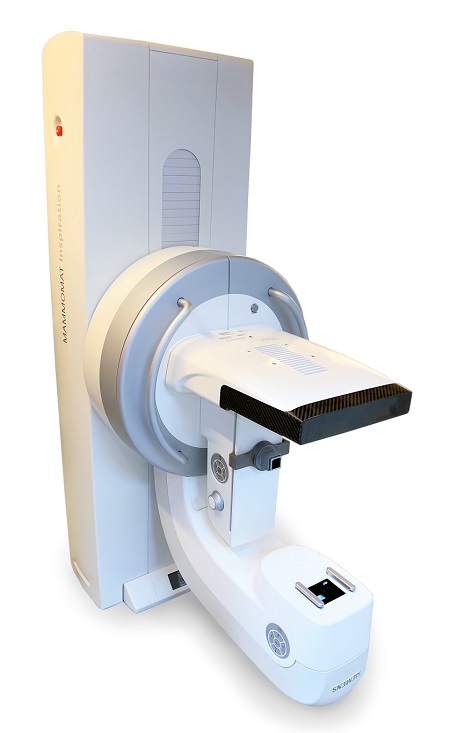
This contains several models all of which have the capacity to get the biopsy option.
The models include the Mammomat Fusion 2D, Mammomat Inspiration 2D and 3D, and the Mammomat Inspiration PRIME 2D and 3D.
The Fusion is an entry level system, while Prime is the newest model from 2013.
It uses lower radiation doses than the previous models.
Among the Siemens mammography machines on the used market, you will also see analog systems such as the Mammomat Nova 1000 and 3000. However, these are not as common.
You can also get older digital models from Siemens, such as the Siemens Mammomat Novation DR.
Philips also offer mammography machines, but we rarely have them at our facility. However, on the used market you could find the Sectra Microdose L30 and L50, and the newer MicroDose SI.
As stated before, brand is not the only thing you need to decide on when purchasing a mammography system.
You also need to determine if you need a 2D or a 3D machine.
Do consider that 3D is better for advanced screening and early cancer detection.
2D is generally the choice if you are performing “regular” X-rays of the breasts.
For instance, to check palpable masses or to prepare for plastic surgery.
We will get back to 2D vs. 3D later.
First, we will explain the difference of analog and digital mammography.
Today digital mammography is the main choice, and it will be the focus of this section.
However, we will still offer a brief overview of the analog systems.
Analog mammography captures the X-ray beams on film cassettes. This creates an image on film that can be examined directly, or it can be turned into a digital image with a CR reader.
On the other hand, digital mammography captures the X-ray on a digital detector which creates the digital mammogram. This allows the images to be analyzed on specialized high-resolution monitors.
This also allows for easy use of digital tools during analysis and diagnostics.
However, the images can be printed if needed.
The main pros of digital mammography are listed here:
However, they are also a bit more expensive than analog systems.
Though we recommend you get a digital system, analog systems have their own benefits. For example, they are very affordable when it comes to purchase price and maintenance.
But, they come with a couple of disadvantages:
Overall, we recommend digital systems, but in some cases analog is also a good choice. Especially if you have a lower budget.
You can read our blog post on analog vs. digital mammography, if you want to know more.
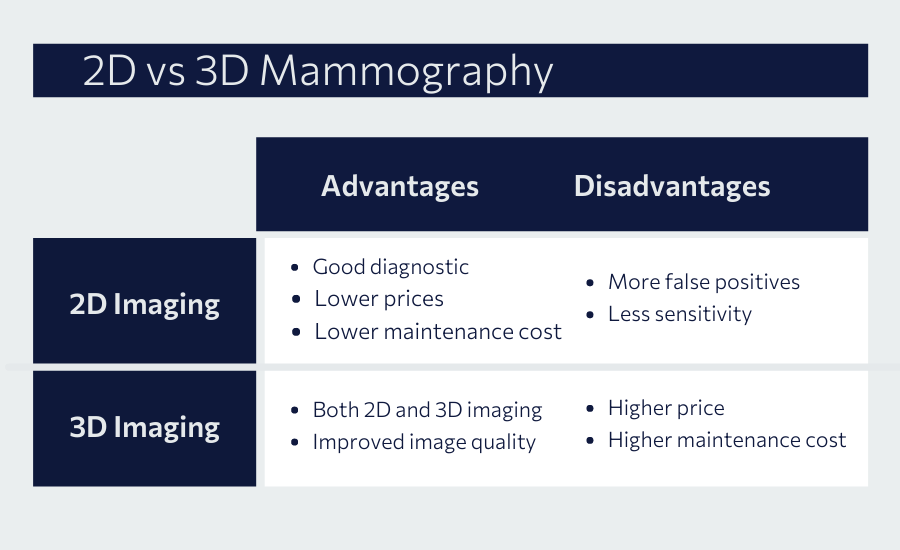
3D mammos are the more popular choice. With tomosynthesis you obtain 3D images by taking multiple mammograms from different angles. These are reconstructed into a 3D image of the breast.
This increases visibility of small changes of the tissue, making diagnostics easier. A normal mammogram consists of one 2D image from one angle.
Additionally, they can detect microcalcifications in the breast tissue, which can be a precursor for cancer.
So, are there really any disadvantages of the 3D mammography?
It is limited. 3D requires a higher radiation dose than 2D images. But, exposure is still minimal and well within doses that are FDA approved.
Also, acquisition and maintenance costs are higher for systems with tomosynthesis.
If you need to do cancer screenings and early detection, you need 3D mammography.
For a thorough walkthrough we recommend our article on tomosynthesis mammography.
What is the mammography machine cost?
This might be the most frequently asked question we get – and it depends.
Year of manufacture (YOM), model, condition, and specifications are all factors that will decide the price of the machine.
However, we will share some general price brackets with you.
Note that he prices cover used systems, as this is what we have nearly 20 years of experience with.
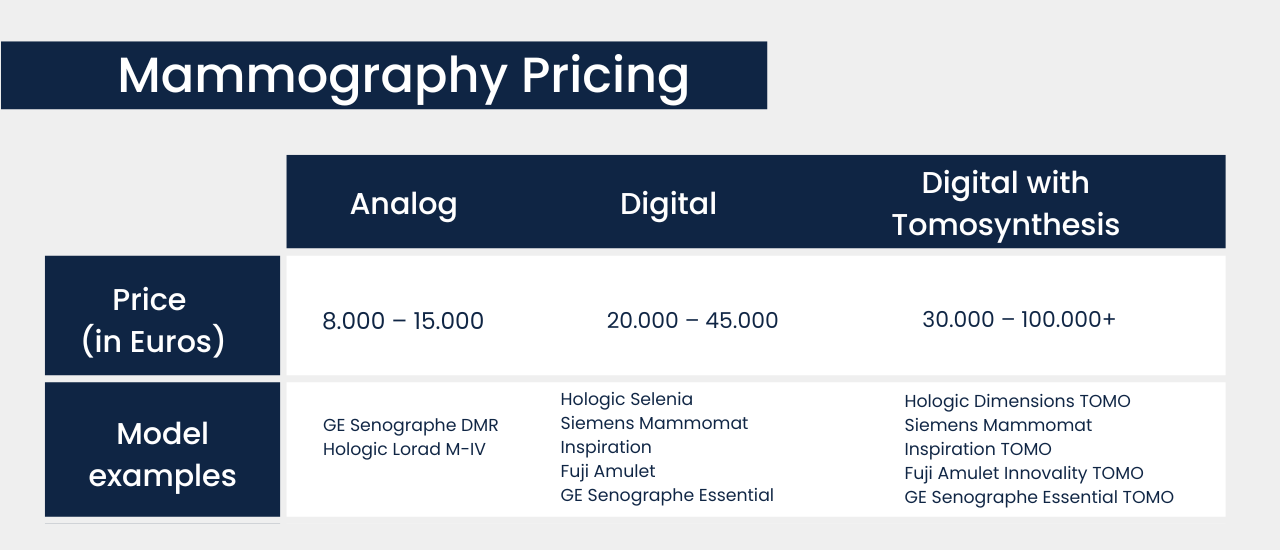
Below is an overview, based on the three categories: Analog, digital, and digital with tomosynthesis.
The table shows prices in euros and are for the systems only.
So, this means that workstations and other accessories are not included.
Furthermore, you need to top off the numbers with costs for crating, shipping, warranty, installation, etc.
And remember, if you buy an analog model, you will need a CR to convert the 2D images into digital ones. So, this would of course result in an additional cost.
The most important part of a digital system is its detector. This is a very expensive part, which is why the condition of the detector usually has a big impact on the price of the overall system.
So, as first stated, the price of a mammography machine depends.
Now, let us go over what accessories you can get for a mammography system.
Mammography machines can require different accessories, depending on your facility.
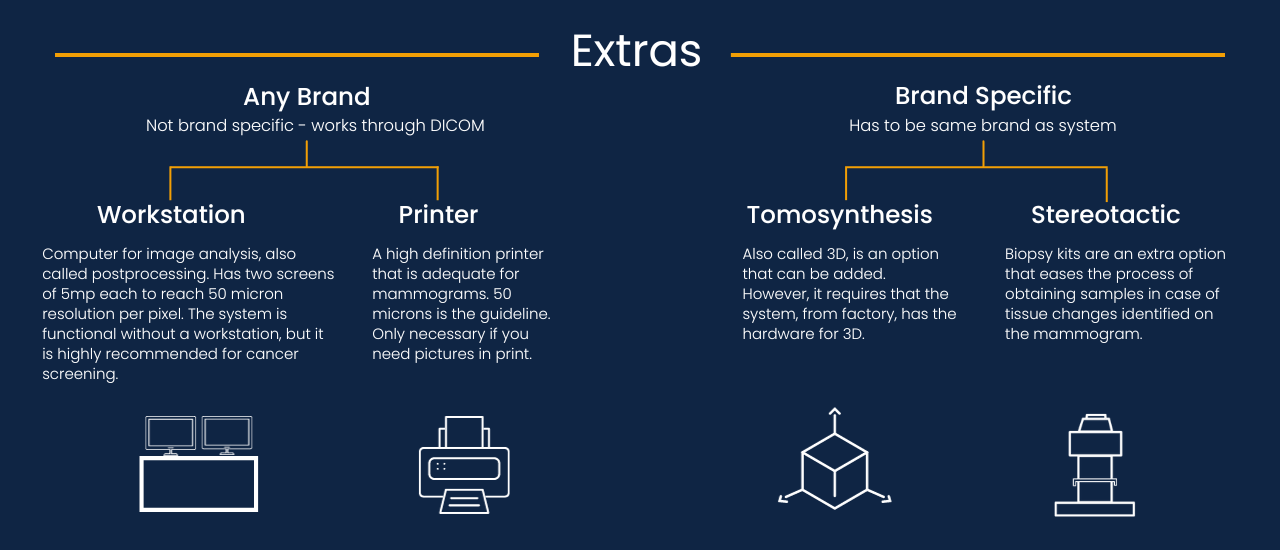
For instance workstations.
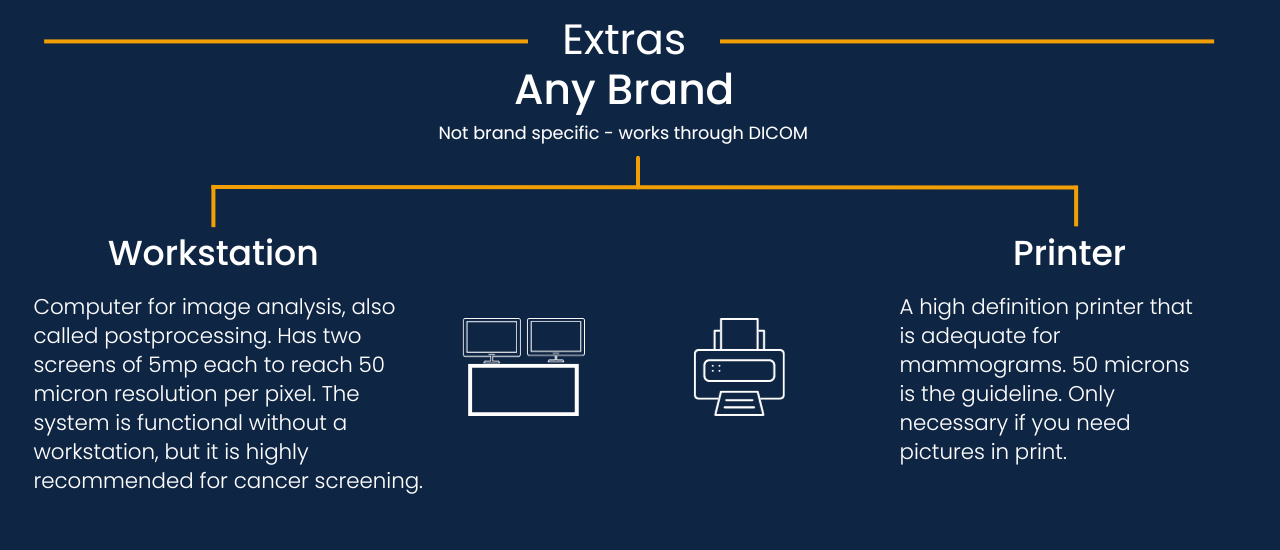
The workstation is the computer that allows you to analyze the mammograms independently of the system and the operative console.
It is doable to analyze images on the operating console. However, we mainly see this when the users are not actively performing cancer screenings.
So overall, we recommend that you acquire a workstation.
As the workstations work on DICOM, the brand of the workstations does not have to match the brand of the system.
Same goes for printers –they can be any brand. The most important is that they need to print in excellent quality, to not lose precision of the images. Not all printers can do proper mammogram printing in adequate resolution, so make sure you get the right one.
As mammograms need to be of very high quality to detect the small changes in the tissue, it is also necessary to have monitors with excellent definition. Furthermore, you need dual monitors, as a standard examination can provide up to 6 images.
A monitor is usually 5 mega pixel (mp). Some of our customers are fine using 3 mp, but we do recommend 5 mp or more, to meet the standard of 50 micron per pixel.
Other mammography accessories are stereotactic, for biopsies, and the tomosynthesis options as described earlier.
If you want to install and take care of your mammography system yourself, there are some very general tips we would like to share.
It is a good idea to:
We also recommend that you do not:
Each model is different and we recommend that you check the service manuals for more model specific information.
So, after all this information, are you on top of the main factors that help you decide on a mammography system that is just right?
Let us repeat the main points.
Would you like to recieve this article as an e-book and at the same time get the content in an easy-to-digest mail course.
Just sign up below.
It will only cost you your e-mail address.
Questions, Comments, Concerns?
Mammography Machine Price – How Much Does It Cost?
Sep 24, 2024
This article has been updated 24-02-2025 In this article we will use our almost 20 years of experience to answer one of the most common...
Enhancing Veterinary Care with Richardson Healthcare
Sep 9, 2024
In February 2021, Richardson Healthcare embarked on an exciting journey with a veterinary center seeking to expand into a new facility. This partnership began with...
Resolving Onsite CT Scanner Issues: A Case Study
Sep 6, 2024
A biomed engineer at a hospital in south Florida encountered a significant issue with an inverter that had previously had its fans replaced due to...
3D Mammography Machine – 3D Mammography Pros and Cons
Aug 18, 2024
This article has been updated 28-03-2025 In this article, we explore the pros and cons of 3D mammography and what to expect when acquiring a...
Analog vs Digital Mammography Machine
May 31, 2024
This article has been updated 24-03-2025 Mammography is used to detect and examine changes in the breast tissue. This is why mammography systems are so...
Here to Help You Predict RDD Failures in Aquilion CT Scanners
May 1, 2024
Our 24/7 Technical Support team, with their extensive knowledge and experience, is always ready to assist our customers when they need us most. Here is an...
The Importance of Proper Care During Detector Troubleshooting and Service
Nov 21, 2023
Our 24/7 Technical Support team helps our customers by answering the call when they need us most. Here is an inside look at why proper care...
May 22, 2023
This article has been updated 05-04-2025 Welcome to this blog post where we talk about mammography accessories. In this mammography accessories guide, we go over...

4 Important Things to Cover During Preventative Maintenance
Aug 23, 2022
Recently, Jerald Olsen, our VP of Sales was quoted in a DOTmed article with important information about quarterly preventative maintenance (PM). We are going to...
Customer Success Stories – LBN Medical
May 31, 2021
Welcome to our Customer Success Stories page at LBN Medical. Here, you’ll find real-life testimonials from healthcare providers across the globe who have partnered with...